

Another Architecture is Probable
An except from a new book by Daniel Jonas Roche and Andrew Santa Lucia on antifascist architecture.
EDITOR’S NOTE: Antifascist Architecture is a new book by Daniel Jonas Roche and Andrew Santa Lucia from Park Books that is “the first attempt at creating a working definition of antifascist architecture after academia has spent decades fetishizing fascist architecture.” We’re pleased to present an exclusive excerpt from the book, slightly edited, and published below. Antifascist Architecture is available now wherever books are sold.

by Daniel Jonas Roche and Andrew Santa Lucia
The last attempt to define antifascist architecture occurred almost fifty years ago. Our book marks the second, most recent attempt, and its timing obviously couldn’t be more appropriate. Its approach differs, however, from those of past interlocutors. These authors are not at all interested in what Foucault called non-fascist life, or what Dal Co and Polano called “non-Nazism,” or in endlessly debating the merits of Albert Speer and Giuseppe Terragni. Nor are we interested in the hauntology of Martin Heidegger or in the rags funded by Philip Johnson’s blood money. Instead, we are more interested in learning from antifascist architects and antifascist buildings.
Apart from its hopeful intellectual and historical rigor, our book is a deeply personal one for both authors. It derives from a feeling of indignation at the modern canon and from a sincere desire for an antifascist alternative. As we show, fascist building projects, and fascism more broadly, saturate architecture in the United States. This plays out both overtly and covertly. We still remember being students in the lecture hall and being told by our history teachers that buildings by Terragni are beautiful—an opinion devoid of material reality, and one that ignores the horrifying conditions that allowed architects like him to perform.
Our book advocates a re-evaluation of what is understood as beautiful, a polemical line in the sand that these authors do not think should be polemical at all. For a work of art or architecture to be magnificent, it can never be fascist. We hope that, one day, the material conditions that create fascism will be abolished, along with the petit bourgeois, snobbish, arrogant culture that preposterously sees beauty in a fascist building.
Another architecture is probable. Such an architecture is only possible if we understand what we, as humans, as architects, believe to be impossible. However, there is certainly nothing more impossible to humans and architects than utopia. It is therefore necessary to suspend disbelief, perhaps even hope or optimism, and to engage directly with the process of utopianism in delineating what qualities an antifascist future would embody. Rest assured, however, that antifascist architecture is nothing new, and it is not utopian, at least not in a negative sense. It has been around for decades, despite what the Ivory Tower would have you believe! It has been built before. And it can be built again, but only under the right material circumstances: those of revolution, of unbreakable transnationalist solidarity, of love, of struggle, of what Ruth Levitas called “militant optimism.”
What parameters were used to identify the architects and buildings that come next? First, the question of aesthetics was necessary—the principles we use to evaluate a building. The ideas and theories in this book are primarily indebted to political philosophies and theories of aesthetics. It is from these two poles that we launch our critique and our quest to build an antifascist discipline for architecture and to survey antifascist buildings—socialist, communist, anarchist,Indigenous, nomadic, militant—and other world-building systems outside capitalism. Simply put, we should not build an antifascist world with the architecture of capitalism. Furthermore, to do so would be to actively appropriate radical possibilities, terms, and forms to be usurped and sold back to us by a capitalist architectural practice. It has happened before (i.e., Mark Wigley at MoMA) and will happen again.
Second, recognizing the epistemic weight of architecture as a discipline in capitalism is paramount; and possessing the self-awareness to practice within capitalism while knowing how we can play our part in dismantling anything, anarchistically, is key. Mutual aid is a human action that can momentarily set us free from the deadly grip of capitalism, allowing us to see another side, a probable one, potentially immediately. Anarchism is a necessary approach to delaminating the architecture of capitalism because its primary methods coalesce nicely with the tension of reality that architecture strives to create—world-building, fidelity, accuracy, and certainty are all aspects of architecture that historically have acted more like weapons than theories. It follows that incorporating mutual aid in contemporary disciplinary dialogues both in and away from their application in the world can potentially help us take back something the discipline has stolen—function, program, and human being.
Third, the problem of solidarity between the building trades—architects, designers, unlicensed architects, construction workers, plumbers, electricians, general contractors, deans, directors, chairs, tenured faculty, contingent faculty, students—puts everything into perspective. A powerful political education will either make you seek solidarity or oppose it with every fiber of your being. Indoctrination and sycophantism go hand in hand with the fascist architectural tropes of modernist and postmodernist US architecture theories; solidarity opposes those two things by forcing us to see ourselves collectively through the perspective of others who are either equally or fundamentally more oppressed. Political systems, such as socialism or social democracy, and pragmatic action-oriented systems like anarchism provide that necessary escape velocity from the genius, the master, the pupil, and most business ontologies of US architecture so prevalent today, which is why they are suppressed in all forms of popular dialogue in this country and others.
Fourth, the humanity of it all needs to be recoupled with the political systems most likely to ensure human, animal, and earthly liberation—political education leads to awakening, and once awake, it is hard to ever sleep soundly again. There needs to be way more political education and ethics taught in architecture schools. That’s just a fact, and it can happen tomorrow.
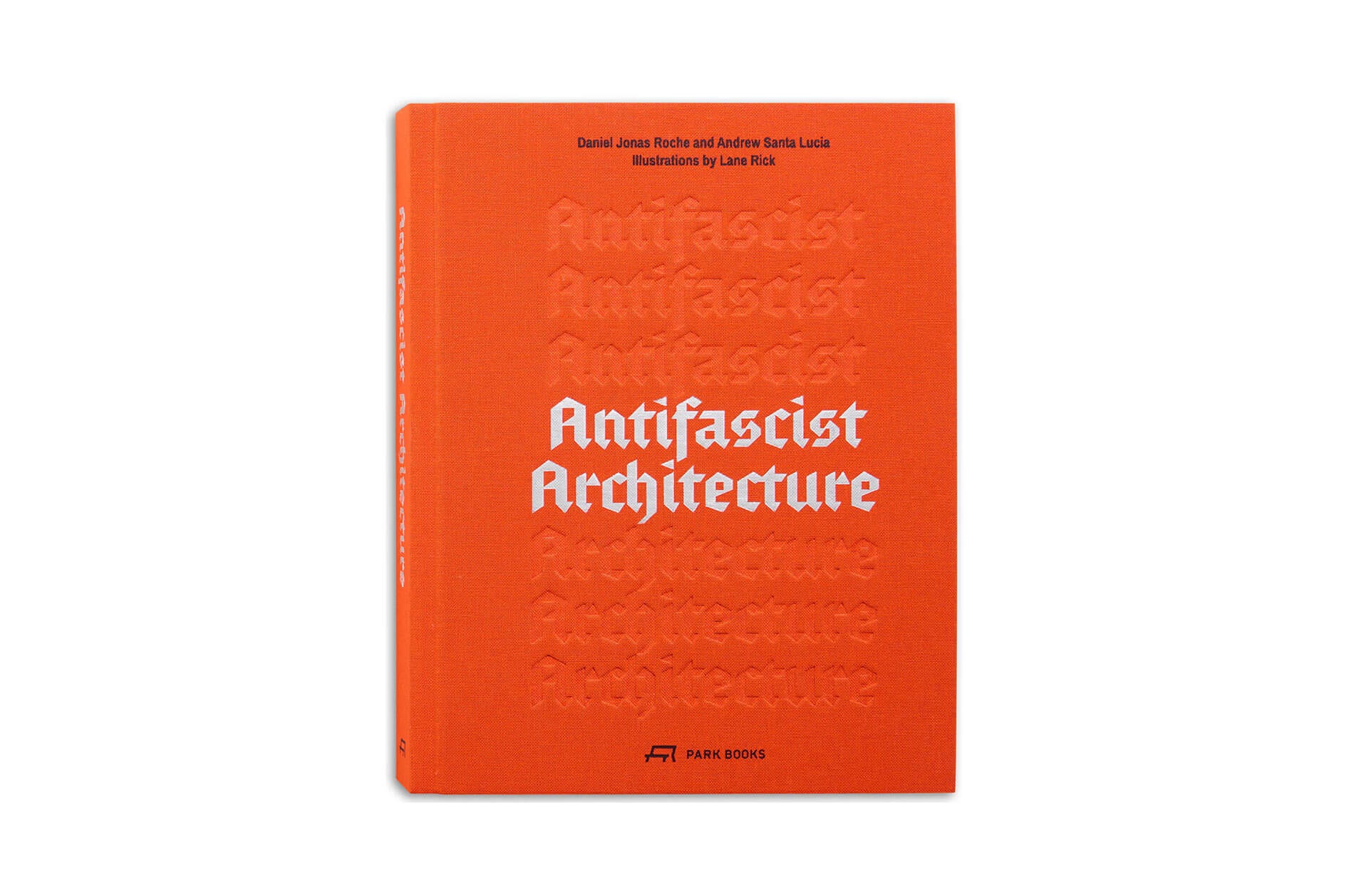
This is an edited excerpt from Antifascist Architecture by Daniel Jonas Roche and Andrew Santa Lucia. It’s available now, wherever books are sold, from Park Books. It’s been republished here with permission from the publisher.